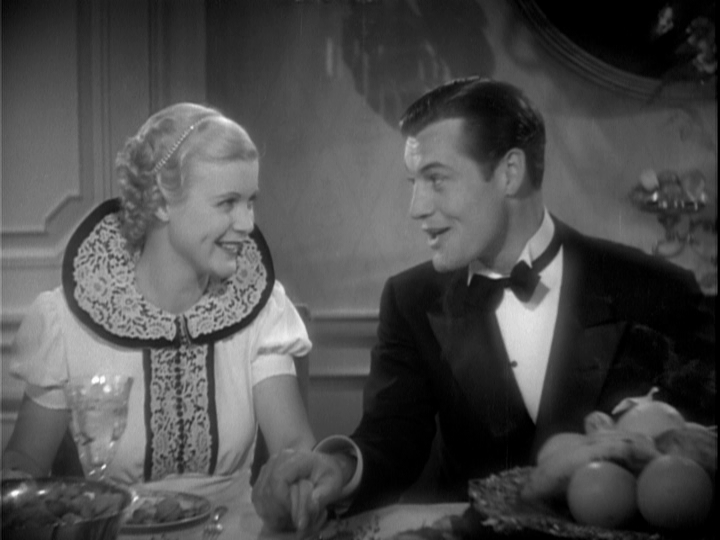
The Many Moods of Charles Starrett
July 23, 2008
“West of Cheyenne”
July 22, 2008
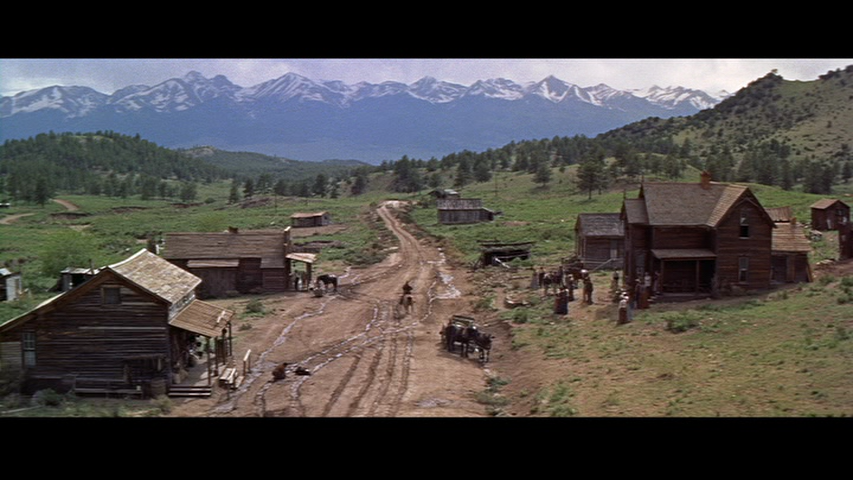
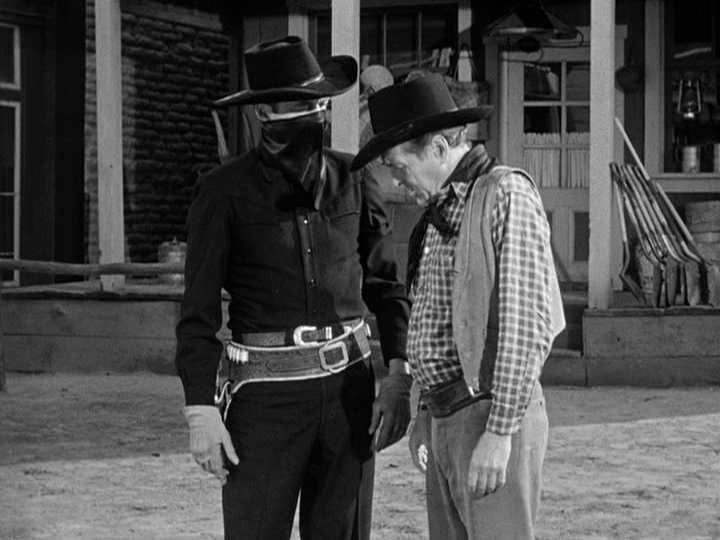
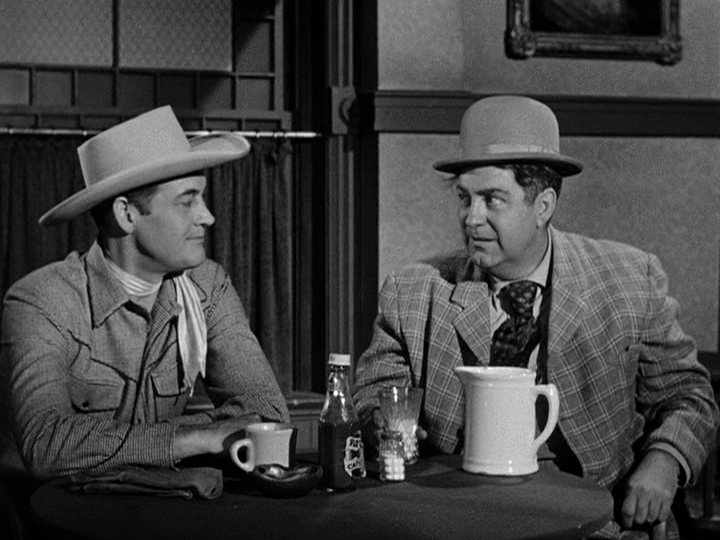
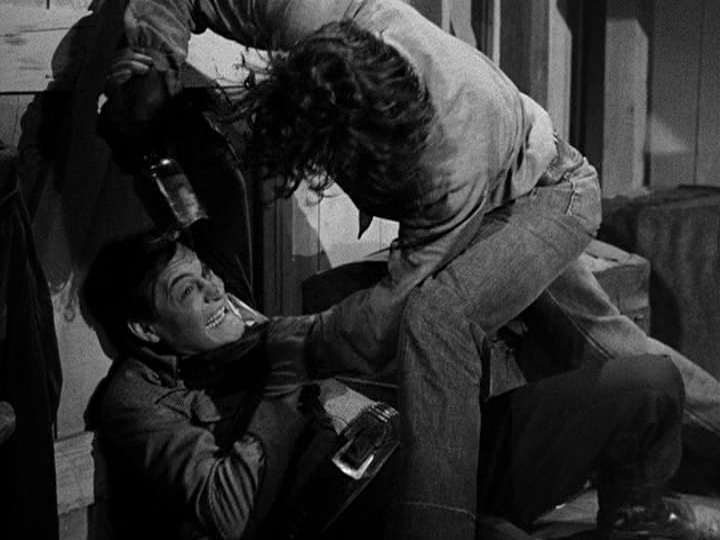
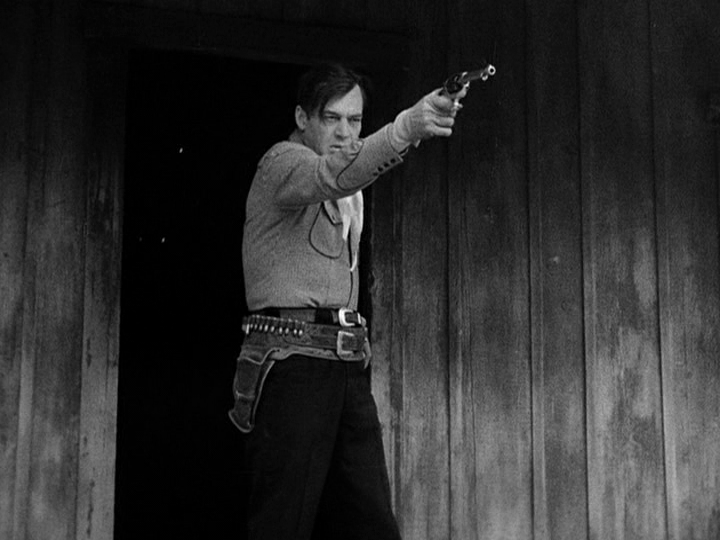
This 1938 film has an odd way of moving. It sort of jerks along, doubles back on itself, and then inches forward. Basically, before anything happens, the characters discuss doing it. Then they do it. Then they discuss what just happened. Repeat. If this sounds unsatisfying, it is. Add to this the fact that good guys are often listening on on bad guys’ plans, and bad guys are often listening in on good guys’ plans. This way, we get to overhear a plan, then hear it again when it is repeated to the gang, then see it, then hear all about it.
The end result is that out of 54 minutes we end up with about 10 minutes of story.
That plot is this: Brad (don’t call me Steve) Buckner and his posse have just bought the Bar W Ranch. The previous two owners were “mysteriously killed” by the gang of rustlers who are hiding their stolen herd on the land. Dick Curtis and his bunch then try to kill Brad repeatedly.
There’s lots of goofing around over at the Bar W. Plenty of singing about food, chasing each other this way and that, giggling like retarded children. If these sequences are supposed to serve the narrative function of painting the way of life of these cowboys as worth protecting, it backfires. Shoot em. Especially when they attempt to hang a character named Shorty just so they can keep on playing grab ass around the dining table. Shoot em all, Dick, shoot em all.
There’s a crazy continuity problem. The gang is having dinner with the gal at the ranch when there is an attempt on their lives. They decide they better ride with the gal to town. “While we’re there, we’ll sign those papers.” And they ride off. When they arrive in town, the gal is there waiting for them and says “Good morning!”
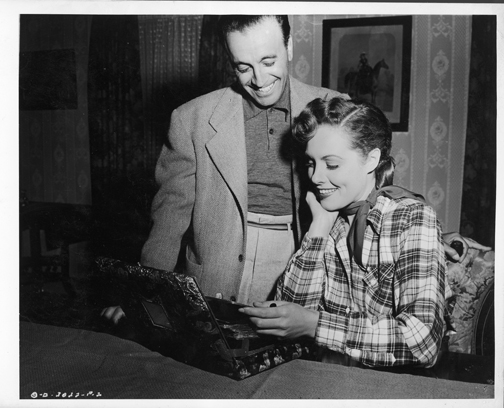
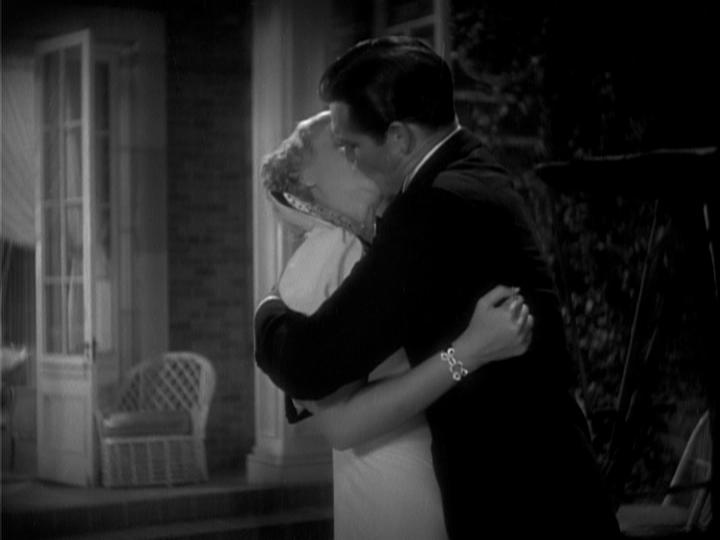
Charles has a couple of pretty passionate love scenes in this — two long kisses and they get married in the end. In her 18 films with Charles, Iris Meredith played the gamut of love interest roles. She’s the passionate love interest in this film and “Western Caravans.” She’s the gal who’s around at the end for Charles to wave goodbye to (”Texas Stampede” for one). And she’s the gal who gets pawned off on his friend (in most of them.)
Charley fans his gun just like in 1937’s “Outlaws of the Prairie”. At some point, he stopped doing this.
In another similarity with “Outlaws of the Prairie”, the film ends with Charley going mano-a-mano with the bad guy. This also stopped happening.
Oh, almost forgot. Charley sings in this one! “Happy Birthday to you…”
“Fast And Loose”
July 21, 2008
Charles’ first film!
In 1926, Charles and his fellow teammates on the Dartmouth football squad played extras in a silent comedy called “The Quaterback.” That same year, he graduated from college.
For the following years, I have little information. I’ve read that he did some stage work, was part of a touring company on the east coast, and was in Broadway in a play entitled “Claire Adams”.
Somehow he ended up in Hollywood and acting in this 1930 film, “Fast And Loose.” It is based on play called “The Best People.” Preston Sturges provides the dialogue.
A couple of players went on to be very famous, Carole Lomard and Frank Morgan (the Wizard of Oz.)
Story concerns a wealthy brother and sister who both fall in love with suitors below their social standing. The brother wants to marry a chorus girl, and his story involves an angry society type ratting him out to his parents, a charade that his father and uncle pull to discover the chorus’ girls real intentions, and a brawl during a police raid on a club.
The sister (Miriam Hopkins) is engaged to a boring “stiff” named Lord Rockingham. She breaks it off and drives to the beach to think. She happens to park right where Charley is taking a moonlit swim. He’s dressed in a bathing suit and a towel.
Henry Morgan is a real bathing beauty and a strong man — he acts as a human tire jack to lift the car from the sand. He’s manly, uses lower-class grammar, and has a vaguely Southern accent (he’s from Missouri), so naturally she “hates” him. “You’re a mug.”
She hates him so much she comes back the next night. They talk about how much she hates him. They take a swim. They kiss. She threatens to swim away. He threatens to spank her. He does. “Stop it or I’ll give you some mo’.” It’s a sexy scene.
Of course, she’s smitten and breaks off her engagement. The next day, they discover he’s a car mechanic working on her estate. He thinks that their class differences stand in the way of love. She says, “Whatever you are is good enough for me.”
He’s rude. He quits his job. She sabotages her car to get him back. He’s hotheaded but she melts him, “I don’t see why I’m so weak.”
There’s some protracted nonsense in a judge’s chambers bailing out the kids for drunkenness, and Charley agrees to marry her, on the condition that he is the man and she obeys him. (She also has to give up her wealth.) It’s a happy ending.
Before I saw this film, if you had asked me what Charles first film role would be like, I would have thought it would be a lot like his second role, as the rich and well-bred straight arrow Perry in “Royal Family Of Broadway.”
I wouldn’t have thought he’d be playing some mug full of lower-class pride. I figured he’d be more of the gentile hunk, not in a bathing suit or covered in car grease.
Do Cowboys Go To College?
July 20, 2008
More precisely: do Western movie stars go to college?
Here are the academic careers of the first generation of Cowboy stars:
Tom Mix - enlisted in the Army at 18, worked at the Miller Brothers 101 Ranch, and rode in the rodeo. He started his film career as a cattle wrangler on early cowboy pictures.
Buck Jones - joined the US Army at 16, drove race-cars and performed in Wild West shows before his movie career.
Ken Maynard - a rodeo rider and trick rider with Buffalo Bill ’s Wild West Show and with Ringling Brothers. Served in the Army during WWI.
Tim McCoy - dropped out of St. Ignatius College, a Jesuit school in Chicago, to work on a Wyoming ranch, and then served in World War I before Hollywood.
Hoot Gibson - worked as a ranch hand during his youth, competed in rodeos and served in WW1.
Here are Charles’ contemporaries:
Johnny “Mack” Brown - football star at University of Alabama, appeared on Wheaties Cereal boxes, became an movie actor.
“Wild Bill” Elliot - grew up on a Missouri Ranch, dropped out of community college to enroll in the Pasadena Community Playhouse.
Russell Hayden - no information on his academic career, he worked as a grip before his big break.
Charles Starrett - Worchester Academy, Darthmouth College.
Autry Museum Collection
July 20, 2008
The Autry National Center of the American West is located across from the LA Zoo in Griffith Park. In their Imagination Gallery, they have a collection of memorabilia from various movie cowboys.
In one display case they have Tom Mix, Buck Jones, Ken Maynard and Tim McCoy.
In the next case, we find Hoot Gibson, Johnny “Mack” Brown, Russell Hayden, Bill Elliot, the Hoxie Brothers…and Charles Starrett.
Charles’ collection consists of his hat, boots, holster and pair of revolvers, a belt, and a white scarf.
Of interest, the on-line catalog lists the scarf as having been donated by Mary A. Starrett and the remarks are such:
“White silk chiffon scarf, mid- to late 1900s.
Triangular shape with hemmed edges.
According to donor, scarf was made from material that was once part of a Rita Hayworth dinner dress.”
Now, I’ve heard the story that the black scarf that Starrett wore as the Durango Kid was made from a Rita Hayworth dress. I’ve even read interviews with Starrett himself repeating the story and commenting on how it always smelled great or something. I’ve never heard that this one. (Note: the Autry isn’t claiming this, it’s included as a note on what the donor reported.)
Completing the collection are two neat items. One is Charles’ gold SAG card. This is his Screen Actors Guild membership card and it is made of gold. Charles was one of the founding members of SAG. I’ve never seen a real gold card before.
Last is a leather script binder, with his name and the images of a horse and a cactus embossed on the front.
The Autry is a beautifully laid-out and smoothly run museum which is worth a visit.
“Outlaws Of The Prairie”
July 19, 2008
1937. Pre-Durango.
Cool opening at the Tres Nogales Rangers Station. The Sons of the Pioneers are strumming and singing out front when the air is filled with smoke and gunshots. It’s Dart, drawing and shooting targets off a post.
“Pretty tough losing your trigger fingers and having to learn to fan a gun.”
“How did he lose them?”
“No one knows. He never did say.”
Dart pulls and fans six shots, all bullseyes!
Nice gutsy, tough guy introduction, right? Except, Dart (Charles) is wearing a big spotless white hat, a flowing spotless white scarf, a shiny gun-belt and creased shirt and pants.
A Ranger rides into the station and dies. Dart volunteers to take over his job. Bringing down a gang of stagecoach robbers in Oro Grande.
Travelling to Oro Grande brings Dart to the site of his father’s death. In flashback, we see Bad Men shoot his home-steading father. Young Dart shoots one of them. The gun man grabs him and pulls out his knife. “This will teach you to shoot at me.” He cuts his fingers off.
Dart still carries the knife that did the cutting.
Again, gritty and brutal. This backstory inspires him to grow up to be a tough Texas Ranger — and dress like a circus clown in his big white hat.
I can’t get over the idea that this look was considered cool. That a guy could have as such a dynamite tough guy pedigree, and be expected to dress like that. It’s a different time, I guess.
Familiar plot: banker is secretly running the gang to rob the miners so that he can foreclose on their claims.
Familiar device: Charles stages a fight with a friend to impress said banker and get in with the gang.
This is one of the few films I’ve seen where Charles has a crew — he’s not alone, he’s part of a group. In this case, it’s a bunch of Rangers on the job. I like it. It’s nice seeing him ride up and join the gang around the campfire, have a little coffee and share his plans with his friends.
Very cool ending, with Dart turning in his badge so he can go kill the man who cut off his fingers. It’s a quick draw, and Charles is fast! He outdraws the guy, guns him down, and kills the assassin on the roof behind him to boot.
All the while looking like a big goofball dressed in a big white spotless hat!
Sons of the Pioneers perform a lot of music in this one. I counted six songs.
“Desirable”
July 17, 2008
Handsome advertising man (George Brent) is wooing famous stage star (Verree Teasdale) but falls for her daughter Lois (Jean Muir.)
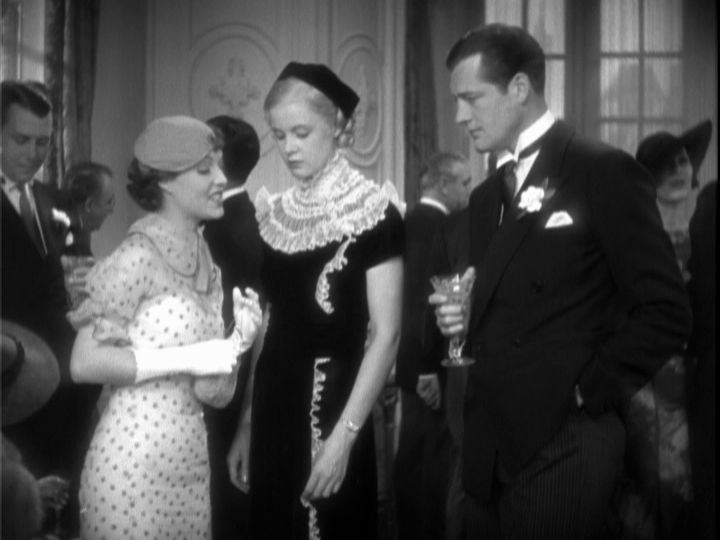
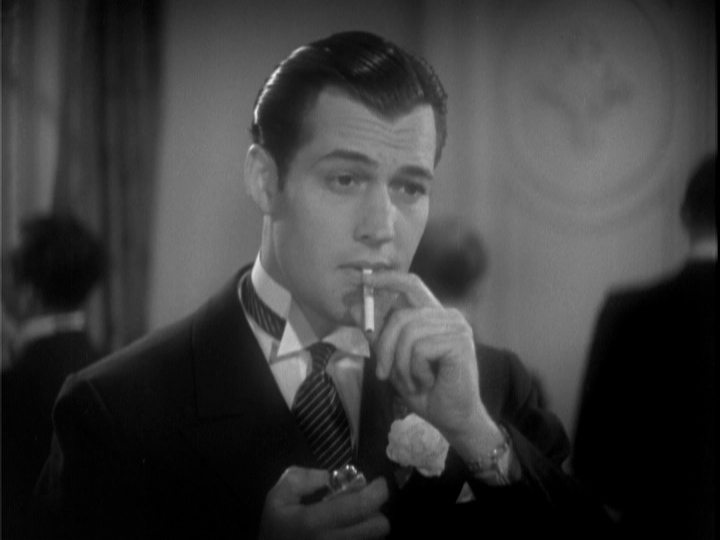
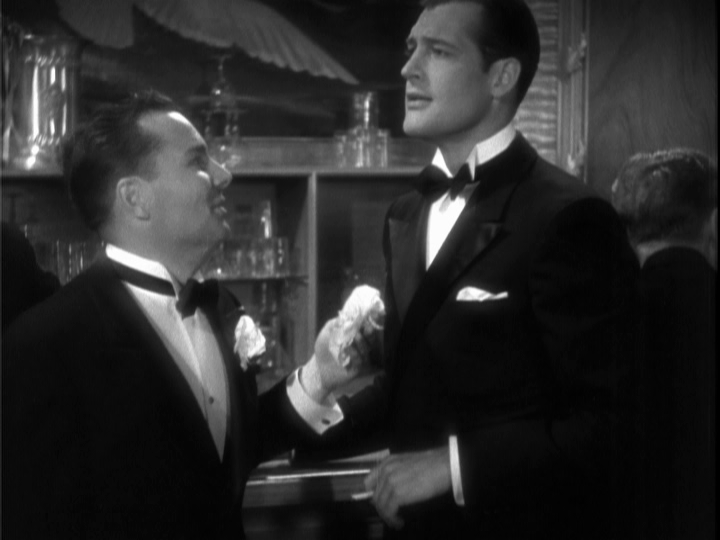
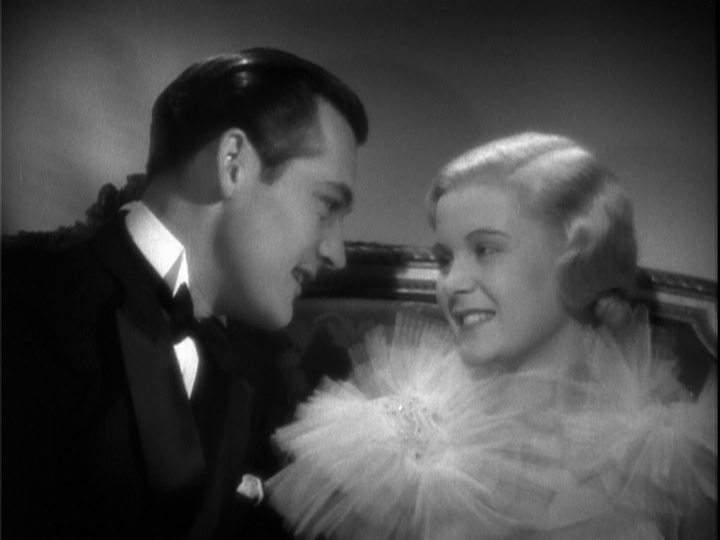
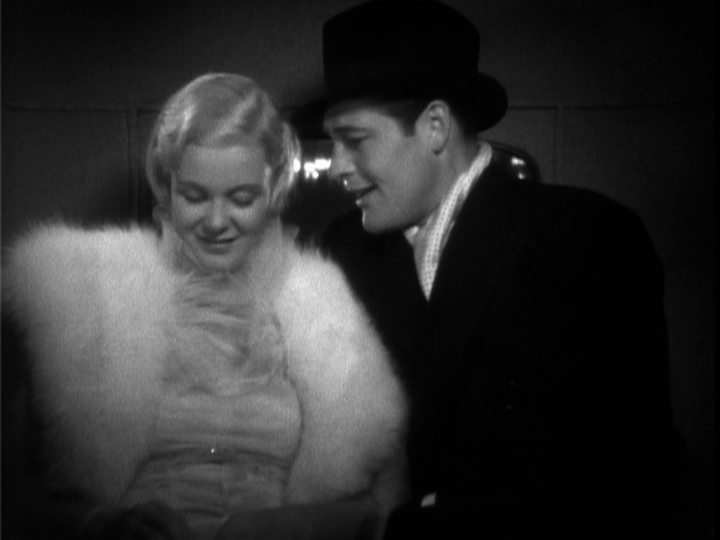
Charles shows up half way through as Russell Gray, a more “suitable” suitor for Lois. This is the second film of 1934 featuring both Charles and Jean Muir. The other was “Gentlemen Are Born.” Much like in that film, Charles is young, rich and charming. He’s comfortable smoking and drinking in a tuxedo, dances with great confidence, and kisses Lois in a cab. There’s a long scene where Lois and her mother talk about how charming and nice and well-bred he is. And what a great kisser. Soon they are engaged.
It’s interesting how effortlessy Charles plays the desirable lover in these early films. And yet, in the Westerns, it’s never really convincing. Over the years, the love stories get smaller and smaller, then they give them to the second male lead with Charley as the sometimes unknowing and often disinterested rival, and finally they just give up all together. A number of his later films don’t even have a single woman in them.
I think part of the problem is the good guy western star thing. It’s a strange machismo that Charley embodies. He’s good with a punch and gun, can talk tough, but he’s got the white hat and the ready smile too. Something about this didn’t allow room for the lover. At least, Charley never seemed to find it in these roles.
I don’t think I’ve nailed this thought. I’ll have to come back to it. Stay tuned!
“Lone Hand Texan”
July 17, 2008
A first! I’ve seen 56 Starrett Westerns so far and I’ve seen something for the very first time: a black man! Jasper P. Weldon plays William, the man-serveant and buggy-driver for a rich lady with a parasol. Jasper made 14 films in his career and this is only the second one where he has a name. Generally, he’s listed as “Porter”, “Driver” or “Red Cap.”
There’s also a new twist in this one. The coveted land is sought after by the bad guys because of Oil! Sam Jones’ oil derrick keeps getting blown up, so he sends for his old friend Steve Driscoll.
There are some old faces - Fred Sears plays Sam Jones, Maudie Prickett plays Hattie in one of her five turns as Smiley’s love interest/tormenter, and Mustard and Gravy sing, play guitar and mug as assistant mailmen.
And, of course, Smiley. He doesn’t know Steve in this one — they are introduced at the beginning.
Yes, any amount of Smiley is too much Smiley, but this is too much Smiley! He seems to be in every scene. He’s the “Lead Letter Carrier of Oil County.” And he works in the local store. And he sings. And he does shtick delivering mail. And he’s courting that rich lady with the parasol. And he’s the blabbermouth that keeps telling the bad guys Steve’s plans.
It gets so you can’t have a decent fistfight without Smiley jumping in there with his “comedy.”
There is this nice exchange:
Outlaw: You’re going to dig a grave for a fat boy.
Smiley: Aw, why don’t you let him dig it?
Outlaw: That’s exactly what I mean!
Columbia contract player Robert Kellard plays a unique character named Boomer Kildea. He’s a big tough wildcatter who has history with Steve down in El Paso where Steve beat him in a fistfight. He’s this giant of a guy who wears clothes two sizes too small. We’ve seen him before in “Fighting Buckaroo” and “Pardon My Gun.”
Charley makes a pretty speech at the *yawn* town meeting. He does some nice riding as Steve. One really nice running mount as Durango.
A Gold Star to whoever can figure out what a “Lone Hand Texan” is. Bonus points if you can figure out how the hell it relates to this movie.
“Gentlemen Are Born”
July 16, 2008
It’s 1934 and Charles is playing a small role in this First National Picture. He’ll play the lead in his next four films before playing an even smaller role in another Franchot Tone vehicle “One New York Night” (see blog entry).
This film follows four graduates during their first year out of college. The Jock, the Banker’s Son, the future Architect and the future Newsman. Franchot Tone (the 30’s Johnny Depp, IMHO) plays the aspiring newsman and he’s in love with Joan.
Charles plays Steven (already a Steve!) Hornblow, “the competition.” He’s “a stuffed shirt, lots of dough and sweet on Joan.”
He’s in six scenes, none of which last more than two minutes. He wears tailored suits, holds cocktail glasses, smokes, sits behind a desk and hangs on a gal’s arm. He’s much less the hunky fiance than could be expected from earlier, similar roles.
He also has a heart, giving the down-on-his-luck Jock a job.
Charley’s stand-out scene in this is a fiery speech to the Jock, urging him not “to be a quitter” and to “find yourself.”
“There’s always a job for a man in his field!”
Truer words, Charley. Who knew that your field was Movie Cowboy?
“Lawless Plainsmen”
July 16, 2008
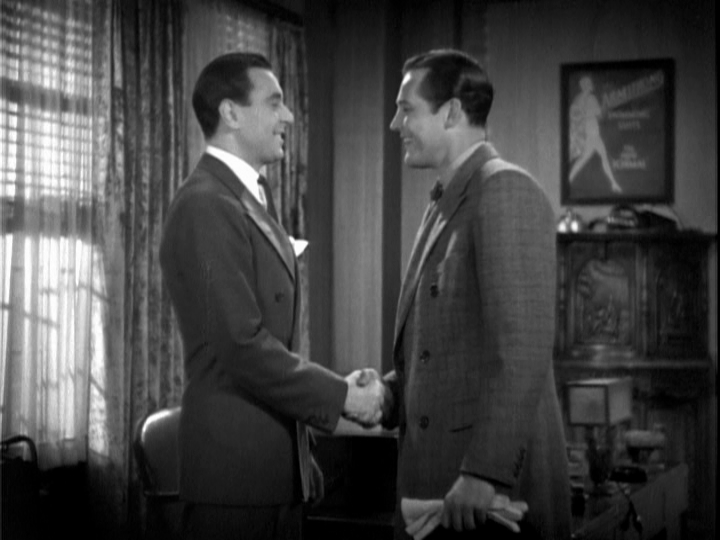
1942 film is the third pairing of Charles Starrett and Russell Hayden. Both names appear above the title, yet Charles is first and that’s not how the alphabet would have it.
I wonder how Charley felt about this pairing. Here he was, 7 years and nearly 50 films into his cowboy career at Columbia. And the Powers That Be decided that he needed a partner! This kid Hayden who barely had 30 films under his belt!
I don’t know if it’s a sign of their feelings about one another, but they are hardly together in this film. I count like a dozen scenes at most.
This is a Wagon Train picture. The first 20 minutes of this film is a series of convoluted events to get the pair on that Train. Steve Rideen and Lucky Bannon (as we know Charley is always Steve and Russell is always Lucky) are completing a cattle drive from Texas. Steve is the Foreman; Lucky is the boss’ son.
In town, Steve ogles the ladies. “Still looking ‘em over, eh Steve?” “Two lovely ladies in two blocks, that ought to be against the law!” You’re trying too hard, Charley. Meanhwhile, Lucky gets in bar fight, shoots a gun, is injured and spirited out of town on a wagon. Steve rides after him to bring him home, but when the leader of the train gets shot, he must lead the group to Arizona.
After this, it’s a high-paced greatest hits of Wagon Train flicks — they get attacked by Apaches, circle the wagons, search for water in the desert, get captured by Indians, escape, meet Kit Carson, defend a fort and get saved by the Cavalry.
I’m often puzzled by the insertion of the lame “mystery” element into many of these films. I don’t know enough about the B-Western genre to know if this is a staple. I mean, do Buck Jones, Bill Elliot, Tex Ritter, Autry, Roy…do these guys have to “solve a mystery” in their films? It’s always stupid and Steve always “has a pretty good idea who’s behind it, but I need proof.” He has a pretty good idea, and so do we, because we already know who’s behind it. Because the filmmakers showed us!
The “mystery” here is who shot the Bill Mason, the leader of the Wagon Train. It’s Seth McBride. He dresses all in black. For good measure, so do his henchmen.
Funny bit where Charley gets in fistfight and afterwards compliments his opponent, “you got a pretty good left” as he rubs the left side of his face. Unless the guy back-handed him when I wasn’t looking…
Harmony (Cliff Edwards) provides the comedy and tunes.
Kit Carson is played in a brief scene by veteran character actor Forrest Taylor.